
Short answer: pressure-treated wood is the cheapest way to build a deck in Colorado, and composite costs more up front but skips the regular re-staining wood needs. Published cost guides put pressure-treated wood at about $25–$50 per sq ft installed and composite at about $40–$80. If you plan to stay for many years and dislike maintenance, composite often makes sense; if budget comes first, wood does. Here is how the two compare under Denver's sun, snow and hail.
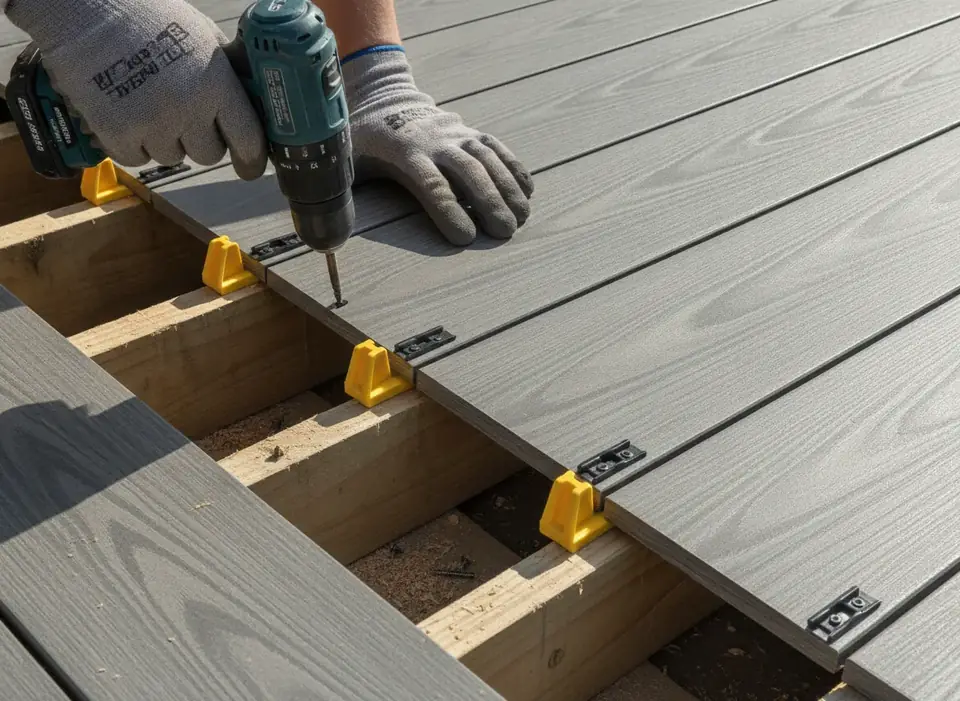
What each deck costs in Denver
These are typical ranges from published cost guides (2025–2026) — estimates, not quotes. Denver-wide, cost guides show about $34–$69 per sq ft for a new deck, with an average project around $9,640 (Angi Denver).
| Material | Typical installed range | 12×16 deck (192 sq ft) |
|---|---|---|
| Pressure-treated wood | $25–$50 per sq ft | $4,800–$9,600 |
| Cedar | $30–$47 per sq ft | — |
| Composite | $40–$80 per sq ft | $7,680–$15,350 |
| PVC | $50–$70 per sq ft | — |
Sources: HomeGuide deck cost guide and HomeGuide composite decking prices. The board itself explains most of the gap: HomeAdvisor lists material-only prices of about $2–$5 per sq ft for pressure-treated, $3–$7 for cedar and $12–$22 for composite (HomeAdvisor). Framing underneath is usually pressure-treated lumber either way. For your own numbers, try the calculator on our Denver deck cost page.
Maintenance: where wood costs you later
Wood decks need periodic cleaning and re-staining. The USDA Forest Products Laboratory says UV radiation, water and abrasion are what weather a wood deck, and it recommends penetrating finishes, such as water-repellent preservatives and semitransparent stains, over film-forming finishes that can peel (USDA FPL, Finishes for Wood Decks). Pigment in the finish is what blocks UV. A trade source puts semitransparent stains at about 2–3 years on horizontal deck surfaces (JLC).
That upkeep has a price. Cost guides show staining and sealing at about $1.57–$4.04 per sq ft, and stripping and refinishing at $3.00–$6.50 per sq ft (HomeGuide). On a 300 sq ft deck that adds up over a decade, which is part of why the up-front gap narrows over time. Our post on staining a deck in the Colorado sun goes deeper on finishes and timing.
Composite is not maintenance-free; it still needs cleaning, and snow and debris still need clearing. But it does not need a stain cycle. Ask any contractor quoting composite what the manufacturer recommends for care, and read the warranty yourself rather than relying on a summary.
How Denver's climate affects each material
Denver's weather is dry, sunny and swingy, and all of that matters for decking. NOAA's 1991–2020 normals for Denver International Airport show:
- Only 14.48 in. of precipitation a year, but about 156 nights a year at or below 32 °F (NOAA normals).
- A July average high of 89.9 °F, a January average low of 18.7 °F, and about 46 days a year at or above 90 °F.
- About 47 inches of snow a year (NWS).
At 5,280 feet, UV exposure rises with elevation (EPA), which is the main force fading and graying wood. That makes a UV-blocking, pigmented finish worth planning for on a wood deck from the start. Composite and PVC boards handle UV differently; colors and surface caps vary by product, so look at aged samples if you can.
Hail is the other Colorado factor. NOAA's severe storms lab places the state in "hail alley," which averages seven to nine hail days a year (NSSL), and the May 8, 2017 storm brought baseball-size hail to Lakewood, Wheat Ridge and Golden (NWS Boulder). Neither material is hail-proof. Ask contractors how the product you choose has held up locally and what a damaged board costs to replace.
Structure, snow and footings are the same either way
The decking choice does not change the code. Denver's frost line is 36 inches and the ground snow load is 43 psf, and decks must carry the greater of the live load or the snow load. Framing requirements can vary by decking product, so ask to see joist spacing on the plans. Permit rules are identical for both materials, as our Denver deck permit guide explains.
Wildfire areas
If your home is in a mapped wildland-urban interface area, your city or county may require ignition-resistant decking. Your contractor and building department can confirm. This can narrow your material choices on new decks and significant additions; see Colorado's wildfire code and your deck.
Which is better for resale?
In the 2025 Cost vs Value report's Mountain region estimate, a wood deck addition recouped about 97% of its cost at resale and a composite deck about 82%. Composite costs more to build, so it recoups a smaller share even though it can add more dollars. We break those figures down in does a new deck add value in Denver?
How to decide
- Choose pressure-treated wood if budget is the priority, you don't mind staining every few years, or you may sell in the next few years.
- Choose cedar if you want real wood with a warmer look and accept the same finish cycle.
- Choose composite or PVC if you plan to stay, want less upkeep, and can absorb the higher up-front cost.
- Mix them: some homeowners use composite decking on a pressure-treated frame with metal or composite railings. Compare railing options on our deck railings and stairs page.
The fairest test is to get quotes for the same deck in two materials. Independent builders who quote wood decks and composite and PVC decks can price both side by side, including framing, railings, stairs and permits.
About Denver CO Deck Builders. We connect Denver-area homeowners with independent local deck builders for free, no-obligation quotes. The contractor you choose quotes, permits, contracts and builds directly with you. Request a free quote or call Call (727) 300-6656.