
Wood Deck Builders in Denver, CO
Get free quotes on pressure-treated and cedar decks from independent local deck builders in Denver and nearby suburbs. We connect Denver-area homeowners with independent local deck builders for free, no-obligation quotes. The contractor you choose quotes, permits, contracts and builds directly with you.
Get a Free Quote Call (727) 300-6656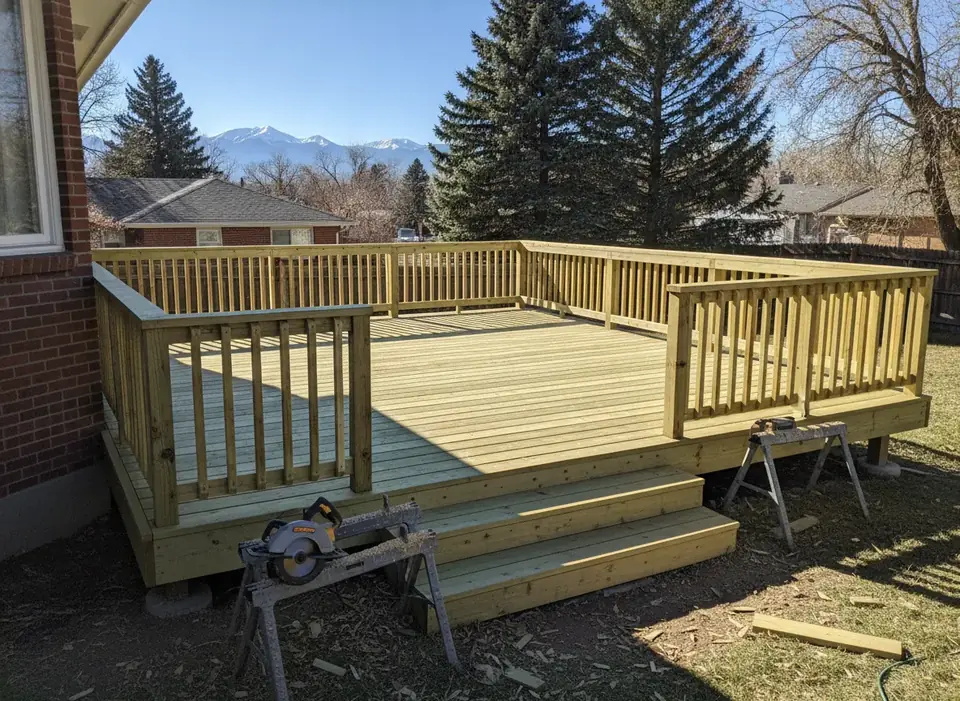
Wood decks remain the starting point
Most deck quotes in the Denver area still start with wood. It is the lowest-cost way to add outdoor living space and can be refinished in a new color years later.
The two common choices for the walking surface are pressure-treated lumber and cedar. Both need periodic cleaning and re-staining to hold up, which is the main tradeoff against composite and PVC decking. In return, wood costs less to build.
Pressure-treated vs cedar: cost and differences
Here is how the two woods compare per square foot installed in published cost guides. The Denver deck cost guide has a calculator for size, railing, stairs and covers.
| Item | Typical range |
|---|---|
| Pressure-treated wood, installed | $25–$50 per sq ft |
| Cedar, installed | $30–$47 per sq ft |
| New deck in Denver, all materials | about $34–$69 per sq ft; average project about $9,640 |
| 12×16 pressure-treated deck (192 sq ft) | $4,800–$9,600 |
| Wood railing, installed | $20–$50 per linear ft |
| Deck stairs | $1,400–$2,600 installed |
| Staining & sealing | $1.57–$4.04 per sq ft |
Typical ranges from published cost guides (2025–2026) — estimates, not quotes.
Pressure-treated lumber
Pressure-treated wood is lumber treated with preservatives so it resists rot and insects. It is the usual choice for framing, posts and beams, and the lowest-cost option for decking. Ask the contractor when the first coat of finish should go on and whether it is included.
Cedar
Cedar is chosen mostly for its color and grain. It costs somewhat more per square foot installed. Like any wood deck surface, it weathers without a finish, so budget for cleaning and stain on a regular cycle.
Resale also favors wood on paper. In the Cost vs Value 2025 report, a wood deck addition in the Mountain region cost about $18,253 and recouped about 97% at resale, a regional estimate (about 95% nationally).
Finishing a wood deck in Denver’s sun
UV light, water and wear are what break down a wood deck surface. The USDA Forest Products Laboratory recommends penetrating finishes for decks, such as water-repellent preservatives and semitransparent stains, over film-forming finishes that can peel on a walking surface. Pigment in the finish is what blocks UV. A trade source (JLC) puts semitransparent stains at about two to three years on horizontal deck surfaces.
Denver sits at 5,280 feet and UV exposure rises with elevation (EPA). Its median freeze-free season runs from May 5 to October 9, which is when many owners schedule staining. Search interest for deck staining peaks in March, ahead of that window. See deck staining and sealing or the guide to staining in Colorado sun.
Denver code basics for wood decks
The 2025 Denver Building Code amends the 2024 IRC and IBC. A few numbers shape every wood deck in the city:
- Frost line: 36 inches. Footings normally go below this depth so frost does not heave the deck.
- Ground snow load: 43 psf. Decks must carry the greater of the live load or the snow load, which affects joist, beam and footing sizes.
- Guards: at least 36 inches where required.
- Plans show footing size and depth, ledger and uplift connections, stairs, guards and handrails.
Ledger rules
The ledger is the board that attaches a deck to the house, and it ties the deck to the house. The American Wood Council’s prescriptive deck guide, DCA 6 (current edition based on the 2015 IRC), says ledgers may not attach to brick or stone veneer, hollow masonry, cantilevered floor overhangs or bay windows; a freestanding deck is used instead. Where a ledger is allowed, it uses ½-inch lag screws or through-bolts, staggered. The ledger attachment guide explains more.
Permits in Denver and the suburbs
In Denver, most decks over 12 inches off the ground need a zoning permit; decks 30 inches or more above grade, decks over 200 sq ft, and all covered decks, porches and pergolas also need a building permit. Rules change; confirm with Denver Community Planning and Development. In most of the metro, an attached deck or any deck 30 inches or more above grade needs a permit; Denver adds a zoning permit above 12 inches, and Parker requires a permit for every deck.
This is general information, not legal advice.
Fees in Denver are valuation-based (no flat deck fee), and fees double (minimum $100) for work started without a permit.
Before you hire a deck contractor
Get the answers in writing before signing.
- License and permit. In Denver, the contractor holds a current City and County of Denver contractor license (residential work is normally Class C) and will pull the permit. In Aurora, Lakewood, Littleton, Arvada, Thornton, Douglas County (Highlands Ranch) and other suburbs, the contractor is licensed or registered with that city or county.
- Insurance. Ask for proof of liability and workers’ compensation insurance.
- Written contract. Get a written contract with scope, materials and payment schedule.
- Approvals. Get HOA approval, and in Denver historic districts a Certificate of Appropriateness, before work starts.
Related services
See also composite and PVC decks, deck staining and deck repair.
Deck quotes near Denver
Wood deck quotes are available across the metro. Each area page notes that city’s permit office and rules.
Get free deck quotes
Share the rough size, height off the ground and whether you prefer pressure-treated or cedar. We usually reply the same day.
Frequently asked questions
How much does a wood deck cost in Denver?
Published cost guides (2025–2026) put pressure-treated wood decks at about $25–$50 per square foot installed and cedar at about $30–$47. A 12×16 pressure-treated deck of 192 sq ft typically runs $4,800–$9,600. These are estimates, not quotes; height, stairs, railing and site access all change the final price a contractor quotes.
Is pressure-treated or cedar better for a Denver deck?
Neither is right for every yard. Pressure-treated lumber usually costs less and is the common choice for framing. Cedar costs a little more and is chosen for its look. Both need periodic cleaning and re-staining. Ask each contractor which species and grade they propose for the decking, the framing and the railing, and why.
How deep do deck footings go in Denver?
The 2025 Denver Building Code sets the frost line at 36 inches, so deck footings normally go below that depth. Denver deck plans must show footing size and depth. Suburbs set their own design criteria, so the contractor should confirm with the local building department. This is general information, not legal advice.
What finish should go on a new wood deck?
The USDA Forest Products Laboratory recommends penetrating finishes, such as water-repellent preservatives and semitransparent stains, for decks over film-forming finishes like paint or solid varnish. Pigment helps block UV. A trade source (JLC) puts semitransparent stain life at about two to three years on horizontal deck surfaces, so plan for regular re-coating.
Can a wood deck be attached to a brick house?
Under the American Wood Council’s DCA 6 deck guide, a ledger may not attach to brick or stone veneer, hollow masonry, cantilevered floor overhangs or bay windows. In those cases a freestanding deck is used instead. Where a ledger is allowed, it uses ½-inch lag screws or through-bolts in a staggered pattern.
Plan your deck before the spring building rush.
Free, no-pressure quotes across Denver, Aurora, Lakewood, Littleton, Highlands Ranch and Arvada.