
If your home is in a mapped wildland-urban interface area, your city or county may require ignition-resistant decking. Your contractor and building department can confirm. Colorado's state board adopted the 2025 Colorado Wildfire Resiliency Code on July 1, 2025. Local governments with wildland-urban interface (WUI) areas had to adopt a code that meets or exceeds it by April 1, 2026 and enforce it by July 1, 2026. It applies to new construction and significant additions, including decking, not to existing decks you leave alone. This is general information, not legal advice.
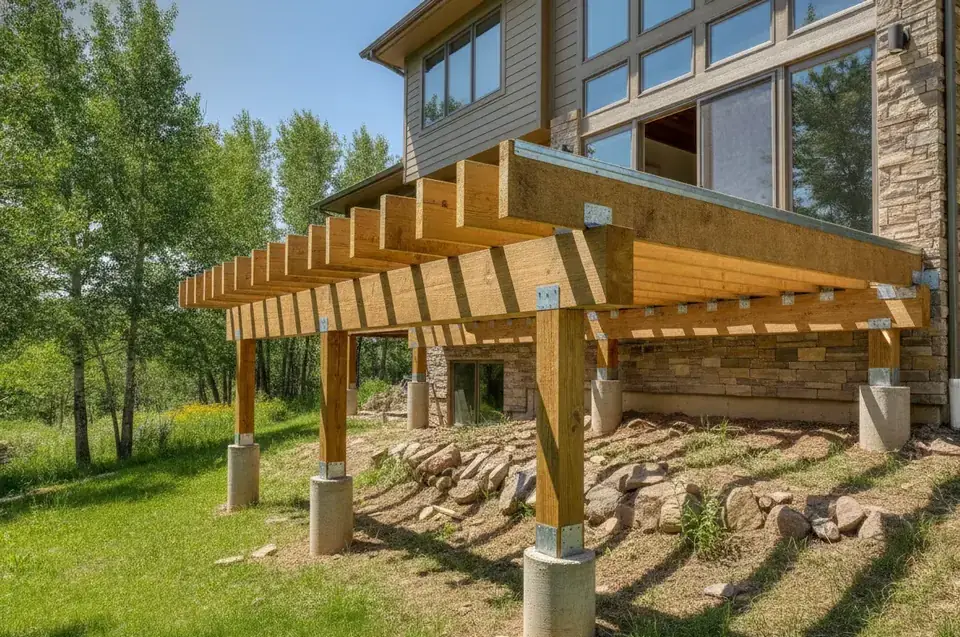
What is the Colorado Wildfire Resiliency Code?
The code came out of Senate Bill 23-166, which created the state Wildfire Resiliency Code Board. According to the Colorado Division of Fire Prevention and Control (DFPC), the code sets minimum standards for building in the WUI, the zone where homes meet or mingle with wildland vegetation. Its structure-hardening rules cover roofing, exterior walls and decking, with the aim of resisting ignition from embers and flame.
It is not a retrofit code. It doesn't require you to tear out an existing deck. It applies when you build new or make a significant exterior alteration or addition in a mapped WUI area, which can include building a new deck or replacing one.
Key dates
| Date | What happened |
|---|---|
| 2023 | SB 23-166 signed, creating the Wildfire Resiliency Code Board |
| July 1, 2025 | Board adopts the 2025 Colorado Wildfire Resiliency Code |
| April 1, 2026 | Deadline for local governments with WUI areas to adopt a code that meets or exceeds it |
| June 30, 2026 | Centennial's wildfire resiliency code takes effect |
| July 1, 2026 | Enforcement deadline (within three months of adoption) |
The rule text is published by the state as 8 CCR 1507-39. The exact requirements for deck materials are set in that rule and in each local adoption, so the material specifics are something to confirm locally rather than assume.
How do you know if your home is in a mapped WUI area?
The code works off maps. DFPC points to the state's Fire Intensity Classification layer, and some local governments use their own maps. Because mapping is parcel by parcel and local governments can adopt stricter versions, the reliable way to know is to ask your building department or check its wildfire code page. A contractor who works in your city should also know whether your address triggers the requirements.
This article doesn't say whether any particular city, Denver included, has mapped WUI areas. Check with the building department that issues permits for your address.
What some Denver-area jurisdictions have published
- Centennial: its Colorado Wildfire Resiliency Code took effect June 30, 2026 (City of Centennial).
- Arvada: the city says permits applied for after July 1, 2026 in Class 1 and Class 2 wildfire areas may trigger the 2025 code's requirements for decks, patio covers and pergolas, possibly including specific deck materials (Arvada FAQ). Check with Arvada for your address.
- Lakewood: the city published ordinance O-2026-14 for adoption (Lakewood legal notice).
- Jefferson County: adopted updates to its wildfire resiliency code in March 2026 (Denver Gazette).
- Douglas County (including Highlands Ranch): the county's deck permit page notes the 2025 code applies in fire intensity class 1–2 areas (Douglas County decks).
Local versions can differ, and they change. Treat this list as a starting point, not a final answer.
What it can mean for a new deck
If your address is covered, expect the permit review to look at more than structure. Depending on your local code, that can affect:
- Decking material. Your city or county may require ignition-resistant decking, which can rule out some boards you would otherwise choose.
- Under-deck areas. Arvada mentions underfloor enclosures among the possible requirements; ask how your jurisdiction treats the space under the deck.
- Covers and pergolas. Arvada lists patio covers and pergolas alongside decks, so a shade structure may be reviewed too.
- Budget and schedule. Approved materials may cost more or take longer to source. Ask for that in the quote rather than finding out at plan review.
Material choice is the biggest decision here. Our comparison of composite vs wood decks in Colorado covers cost and upkeep; in a mapped area, the code may narrow those options. Ask any contractor quoting composite or PVC decks or wood decks which products meet your local code.
Does it affect insurance?
The Colorado Division of Insurance has a page on wildfire resiliency building codes and insurance. If you live near open space or the foothills, it is worth reading and asking your insurer whether construction details matter for your policy.
The wildfire code sits on top of normal permit rules
The wildfire code does not replace the usual permit thresholds. In most of the metro, an attached deck or any deck 30 inches or more above grade needs a permit; Denver adds a zoning permit above 12 inches, and Parker requires a permit for every deck. See our Denver deck permit guide for details, and our post on deck building season in Colorado for timing, since permit review can add weeks.
Questions to ask before you sign
- Is my address in a mapped wildland-urban interface area under my city or county's code?
- Which decking, railing and under-deck details does that code require for my project?
- Does your quote use materials that meet it, and does it include the permit?
- Are you licensed or registered with my city or county, and can you show proof of liability and workers' compensation insurance?
- Will the written contract list the specific materials, scope and payment schedule?
For ballpark costs on different materials, use our Denver deck cost calculator. Prices there are estimates, not quotes.
About Denver CO Deck Builders. We connect Denver-area homeowners with independent local deck builders for free, no-obligation quotes. The contractor you choose quotes, permits, contracts and builds directly with you. Request a free quote or call Call (727) 300-6656.